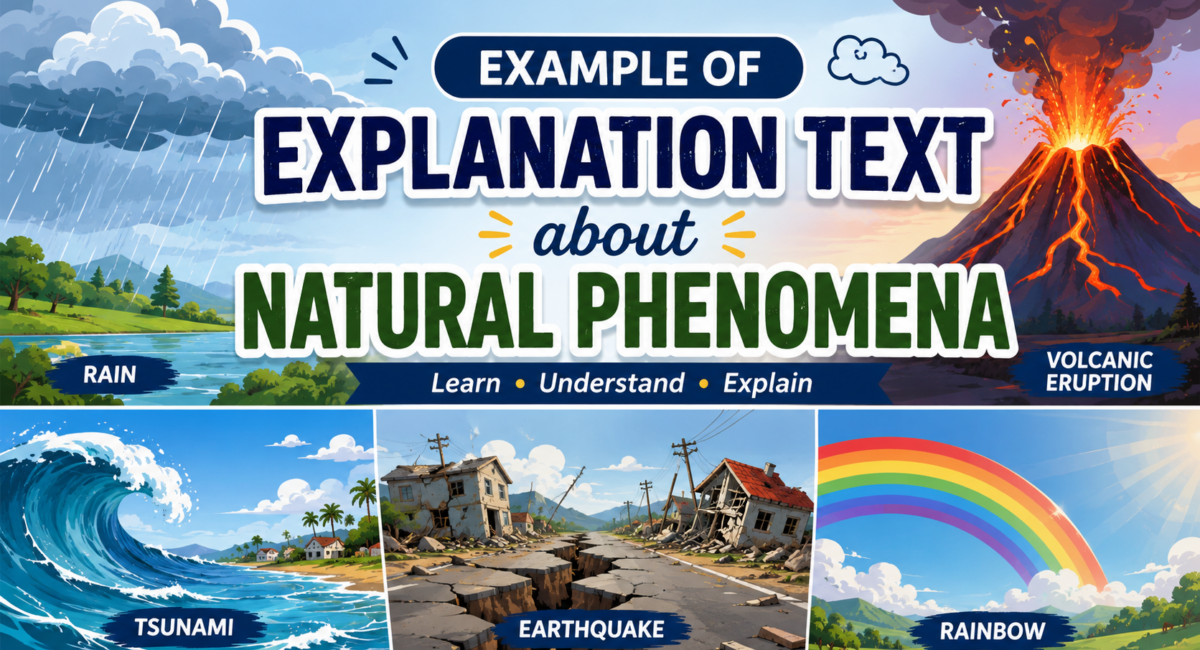
Dalam pelajaran Bahasa Inggris, kamu mungkin pernah mendapatkan tugas membuat explanation text tentang fenomena alam. Topiknya cukup beragam, mulai dari proses terjadinya hujan, gempa bumi, gunung meletus, tsunami, hingga pelangi.
Sebenarnya, membuat teks eksplanasi tentang fenomena alam dalam bahasa Inggris tidak terlalu sulit. Kuncinya adalah memahami struktur explanation text dan menjelaskan suatu fenomena secara runtut berdasarkan hubungan sebab-akibat.
Supaya lebih mudah, di artikel ini kita akan mempelajari pengertian, struktur, ciri-ciri, hingga beberapa contoh explanation text tentang fenomena alam lengkap dengan artinya.
Apa Itu Explanation Text Tentang Fenomena Alam?
Explanation text adalah jenis teks dalam bahasa Inggris yang menjelaskan bagaimana atau mengapa suatu fenomena terjadi.
Fenomena yang dibahas dapat berupa fenomena alam, sosial, maupun ilmiah. Namun, dalam tugas sekolah, fenomena alam sering menjadi topik yang paling banyak digunakan.
Beberapa contohnya antara lain:
- Rain atau hujan
- Earthquake atau gempa bumi
- Volcanic eruption atau gunung meletus
- Tsunami
- Rainbow atau pelangi
- Flood atau banjir
Tujuan explanation text bukan untuk menceritakan pengalaman seseorang, melainkan menjelaskan proses terjadinya suatu fenomena secara logis dan berurutan.
Misalnya, jika kamu membuat explanation text tentang hujan, kamu perlu menjelaskan bagaimana air menguap, membentuk awan, mengalami kondensasi, lalu turun kembali sebagai hujan.
Struktur Explanation Text
Sebelum melihat contoh teks eksplanasi tentang fenomena alam dalam bahasa Inggris, kamu perlu mengetahui strukturnya.
Secara umum, explanation text memiliki struktur berikut.
1. General Statement
General statement merupakan bagian pembuka yang memperkenalkan fenomena yang akan dibahas.
Pada bagian ini, kamu cukup memberikan gambaran umum mengenai topik tanpa menjelaskan prosesnya secara terlalu detail.
2. Sequenced Explanations
Bagian sequenced explanations menjelaskan bagaimana atau mengapa fenomena tersebut terjadi.
Penjelasan biasanya disusun berdasarkan urutan proses atau hubungan sebab-akibat. Karena menjadi bagian utama, bagian ini biasanya terdiri dari beberapa paragraf.
3. Closing atau Interpretation
Bagian ini berisi penjelasan akhir atau rangkuman mengenai fenomena yang dibahas.
Namun, closing atau interpretation tidak selalu wajib dalam explanation text. Teks tetap dapat berakhir setelah seluruh proses selesai dijelaskan.
Ciri-Ciri Explanation Text
Kamu juga bisa mengenali explanation text dari beberapa karakteristik berikut:
- Menjelaskan bagaimana atau mengapa suatu fenomena terjadi.
- Membahas fakta, bukan cerita fiksi.
- Menggunakan hubungan sebab-akibat.
- Menjelaskan suatu proses secara berurutan.
- Sering menggunakan Simple Present Tense.
- Menggunakan kata penghubung seperti because, therefore, then, as a result, dan when.
- Menggunakan istilah yang berhubungan dengan fenomena yang dibahas.
Selain itu, explanation text sering menggunakan kata kerja seperti occurs, happens, causes, produces, moves, dan forms untuk menjelaskan suatu proses.
Contoh Teks Eksplanasi Tentang Fenomena Alam dalam Bahasa Inggris
Berikut beberapa contoh teks eksplanasi tentang fenomena alam dalam bahasa Inggris yang dapat kamu gunakan sebagai referensi belajar.
Contoh 1: How Rain Occurs
General Statement
Rain
Rain is a natural phenomenon and an important part of the water cycle. It happens when water from the Earth’s surface moves into the atmosphere and eventually falls back to the ground.
Sequenced Explanations
The process begins when the sun heats water in oceans, rivers, lakes, and other places. The heat causes the water to evaporate and turn into water vapor. The water vapor then rises into the atmosphere.
As the water vapor rises higher, the air becomes cooler. The vapor starts to condense into tiny droplets of water. These droplets gather together and form clouds.
When more water droplets collect inside the clouds, they become larger and heavier. Eventually, gravity pulls the water droplets toward the Earth’s surface. The water then falls as rain.
Closing
After reaching the ground, rainwater may flow into rivers and oceans or seep into the soil. Later, the water can evaporate again and repeat the water cycle.
Artinya secara singkat:
Hujan terjadi melalui proses penguapan air akibat panas matahari. Uap air naik, mengalami kondensasi, membentuk awan, kemudian turun kembali ke bumi ketika butiran air menjadi cukup berat.
Contoh 2: How Earthquakes Happen
General Statement
Earthquake
An earthquake is a sudden movement or shaking of the Earth’s surface. Most earthquakes occur because of movements in the Earth’s tectonic plates.
Sequenced Explanations
The Earth’s outer layer consists of several large tectonic plates. These plates move very slowly and may collide, move apart, or slide past each other.
Sometimes, the movement of the plates causes pressure to build up inside rocks. The rocks can hold this pressure for a certain period of time.
When the pressure becomes too strong, the rocks suddenly break or move. This releases a large amount of energy.
The energy travels through the Earth in the form of seismic waves. When these waves reach the surface, they cause the ground to shake. This movement is what we experience as an earthquake.
Closing
The strength of an earthquake depends on several factors, including the amount of energy released and the distance from the source of the earthquake.
Artinya secara singkat:
Gempa bumi terjadi ketika tekanan akibat pergerakan lempeng bumi terus menumpuk. Ketika batuan tidak mampu menahan tekanan tersebut, energi dilepaskan dan menghasilkan gelombang seismik yang membuat permukaan bumi bergetar.
Contoh 3: How a Volcano Erupts
General Statement
Volcanic Eruption
A volcanic eruption happens when magma, gases, and other materials from inside the Earth escape through a volcano.
Sequenced Explanations
Deep beneath the Earth’s surface, extremely hot temperatures can cause some rocks to melt and form magma. This magma contains gases and is under high pressure.
Because magma is less dense than the surrounding rocks, it can move upward through cracks in the Earth’s crust.
As more magma and gases collect beneath a volcano, the pressure continues to increase. When the pressure becomes stronger than the rocks above it can withstand, the magma is pushed toward the surface.
Finally, the volcano erupts and releases lava, volcanic ash, rocks, and gases into the surrounding area.
Closing
Different volcanoes can produce different types of eruptions depending on the characteristics of the magma and gases inside them.
Artinya secara singkat:
Gunung meletus terjadi ketika magma dan gas di dalam bumi menghasilkan tekanan yang sangat besar. Ketika tekanan tersebut tidak lagi dapat ditahan oleh batuan, magma keluar menuju permukaan dan menyebabkan erupsi.
Contoh 4: How a Tsunami Occurs
General Statement
Tsunami
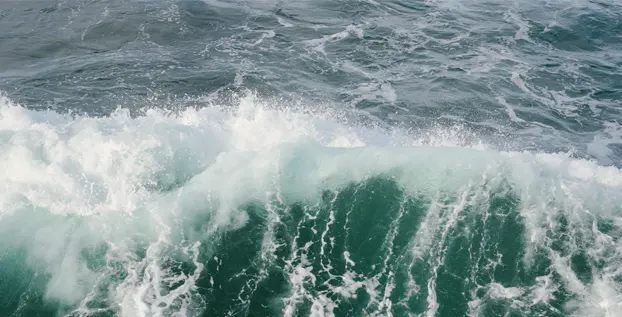
A tsunami is a series of large ocean waves caused by a sudden displacement of a large amount of seawater. Underwater earthquakes are one of the most common causes of tsunamis.
Sequenced Explanations
A tsunami can begin when a strong earthquake occurs beneath the ocean. The earthquake may suddenly move part of the seafloor upward or downward.
This movement pushes a large amount of seawater and creates waves that spread across the ocean.
In deep water, tsunami waves can travel very quickly while remaining relatively low. Because of this, people at sea may not immediately notice them.
When the waves approach the coast, the water becomes shallower. The waves slow down, but their height can increase significantly.
Eventually, the waves reach the land and may flood coastal areas.
Closing
Not every underwater earthquake causes a tsunami. Several factors, such as the location and movement of the seafloor, influence whether a tsunami will occur.
Artinya secara singkat:
Tsunami dapat terjadi ketika gempa bawah laut menyebabkan dasar laut bergerak secara tiba-tiba. Gerakan ini memindahkan sejumlah besar air dan menghasilkan gelombang yang bergerak menuju pantai.
Contoh 5: How a Rainbow Forms
General Statement
Rainbow
A rainbow is a natural optical phenomenon that appears as a colorful arc in the sky. It usually appears when sunlight interacts with water droplets in the air.
Sequenced Explanations
A rainbow begins when sunlight enters a water droplet. As the light enters the droplet, it changes direction. This process is called refraction.
Sunlight contains different colors. When the light passes through the water droplet, these colors begin to separate.
The light is then reflected inside the droplet before leaving it. As it exits, the light is refracted again.
This process separates the colors even more clearly, allowing us to see colors such as red, orange, yellow, green, blue, indigo, and violet.
Closing
A rainbow is usually visible when the sun is behind the observer while water droplets are present in front of them.
Artinya secara singkat:
Pelangi terbentuk ketika cahaya matahari masuk ke tetesan air dan mengalami pembiasan, pemantulan, serta penguraian menjadi berbagai warna.
Contoh Explanation Text Fenomena Alam Singkat
Jika tugas sekolah hanya meminta teks pendek, kamu tidak harus membuat explanation text yang panjang. Berikut salah satu contohnya.
How Floods Happen
A flood happens when water covers an area that is normally dry.
Heavy rain can produce a large amount of water in a short period. Rivers and drainage systems may not be able to carry all of the water.
Blocked drains and a lack of areas where water can enter the soil can make the situation worse. As a result, water begins to collect and overflow into streets, houses, and other areas.
This condition is called a flood.
Artinya:
Banjir terjadi ketika air menutupi wilayah yang biasanya kering.
Hujan deras dapat menghasilkan banyak air dalam waktu singkat. Sungai dan saluran drainase terkadang tidak mampu menampung seluruh air tersebut.
Saluran yang tersumbat dan sedikitnya daerah resapan dapat memperburuk keadaan. Akibatnya, air mulai menggenangi jalan, rumah, dan wilayah lainnya. Kondisi inilah yang kita sebut banjir.
Kosakata yang Sering Digunakan dalam Explanation Text
Saat membuat explanation text tentang fenomena alam, beberapa kosakata bahasa Inggris berikut cukup sering digunakan:
- occur = terjadi
- happen = terjadi
- cause = menyebabkan
- form = terbentuk
- increase = meningkat
- decrease = menurun
- move = bergerak
- surface = permukaan
- pressure = tekanan
- evaporate = menguap
- condense = mengembun
- release = melepaskan
- flow = mengalir
- heat = panas
- water vapor = uap air
Kamu tidak harus menggunakan semua kata tersebut. Pilih kosakata yang sesuai dengan fenomena yang sedang kamu jelaskan.
Cara Membuat Explanation Text Tentang Fenomena Alam
Kalau ingin membuat contoh sendiri, kamu bisa mengikuti beberapa langkah berikut.
1. Pilih fenomena alam
Pilih fenomena yang prosesnya cukup mudah kamu pahami, misalnya hujan, petir, pelangi, gempa bumi, atau banjir.
2. Cari tahu bagaimana fenomena tersebut terjadi
Kumpulkan fakta mengenai penyebab dan tahapan terjadinya fenomena tersebut.
3. Buat general statement
Mulailah dengan mengenalkan fenomena yang akan kamu jelaskan.
Contohnya:
Rain is a natural phenomenon that is part of the water cycle.
4. Susun proses secara berurutan
Jelaskan proses mulai dari awal hingga fenomena tersebut terjadi.
Gunakan kata seperti:
First, then, next, when, because, therefore, atau as a result.
5. Gunakan Simple Present Tense
Explanation text umumnya membahas fakta atau proses yang berlaku secara umum. Karena itu, Simple Present Tense sering digunakan.
Contohnya:
The sun heats the water.
Water evaporates into the atmosphere.
The droplets form clouds.
6. Periksa kembali urutan penjelasannya
Pastikan pembaca bisa memahami hubungan antara satu proses dengan proses berikutnya.
Hal terpenting ketika membuat teks eksplanasi tentang fenomena alam dalam bahasa Inggris bukan menggunakan kalimat yang terlalu rumit. Gunakan kalimat sederhana tetapi tetap jelas, logis, dan sesuai dengan proses sebenarnya. Dengan memahami pola general statement dan sequenced explanations, kamu akan lebih mudah membuat explanation text untuk berbagai topik fenomena alam.